








Your Custom Text Here
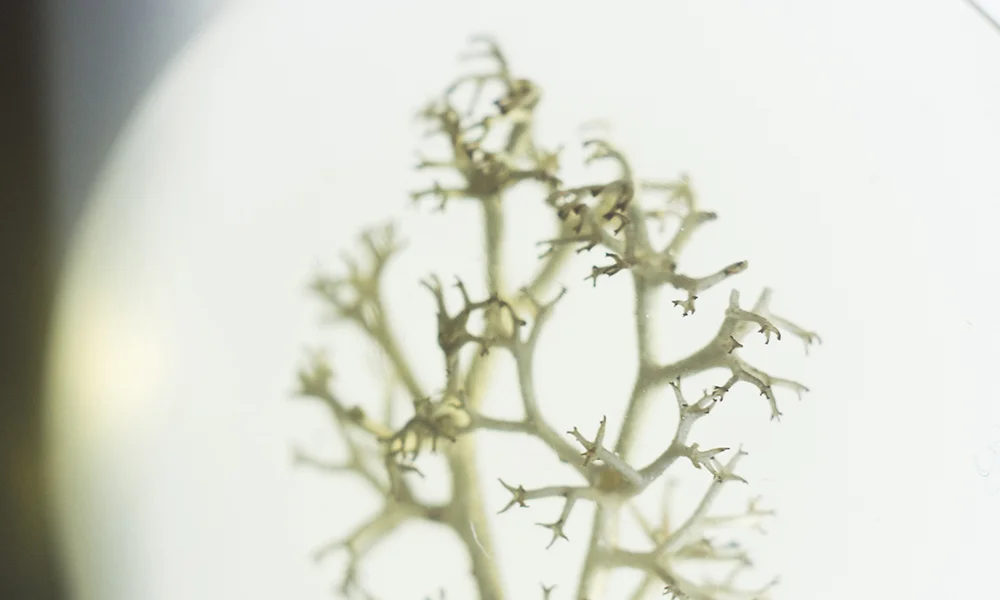
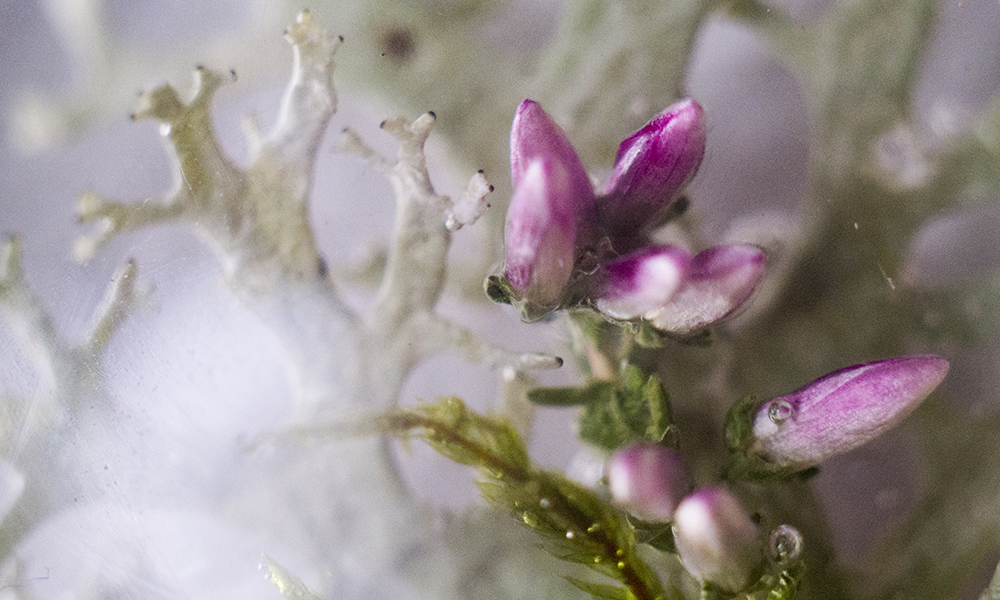
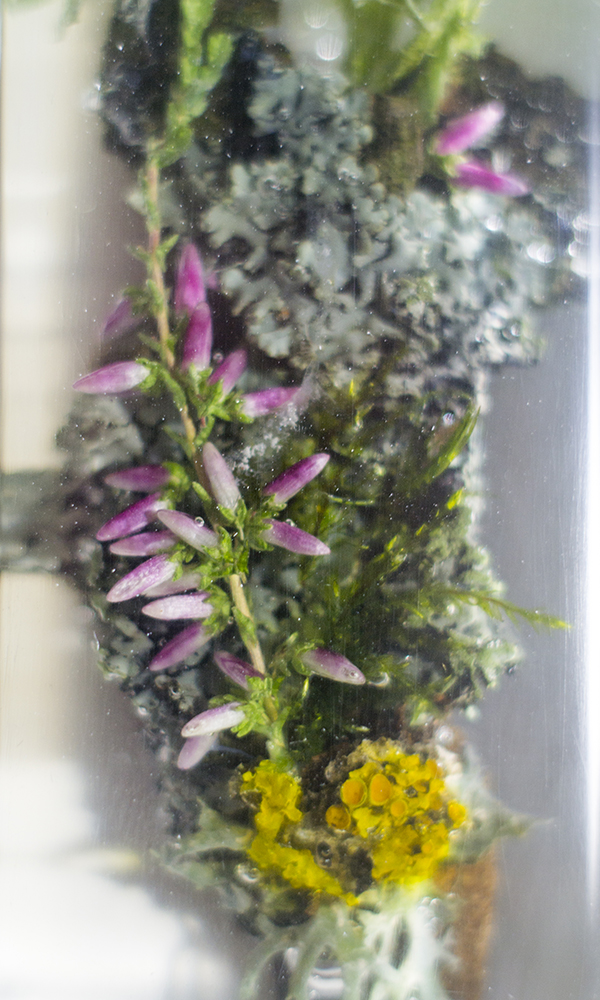
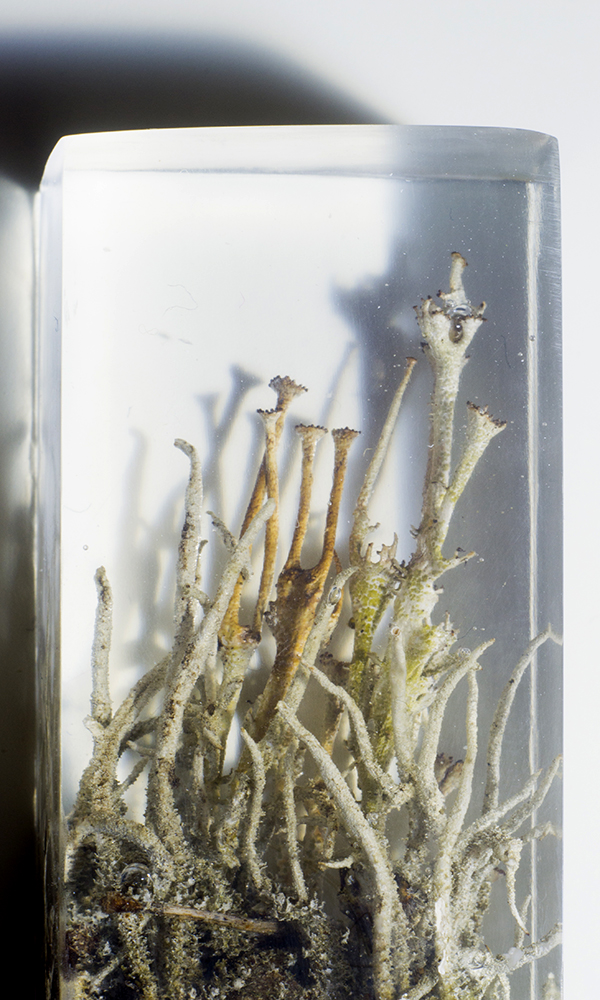
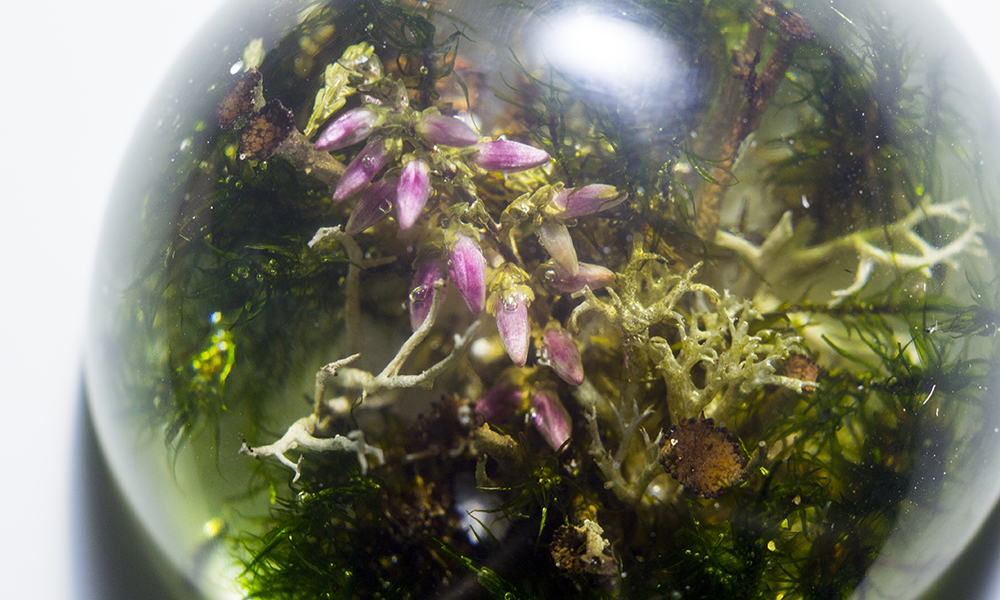
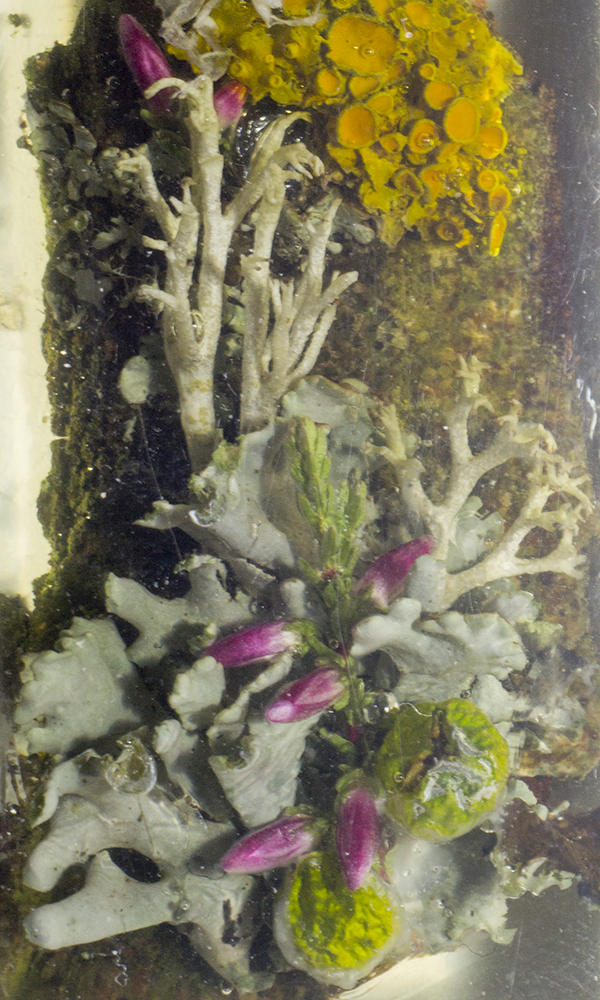
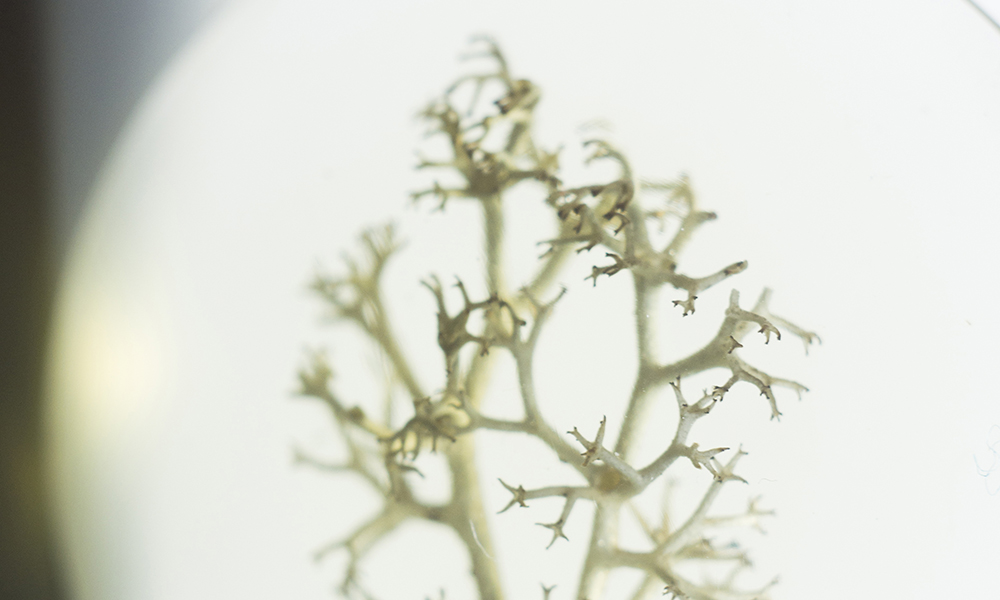
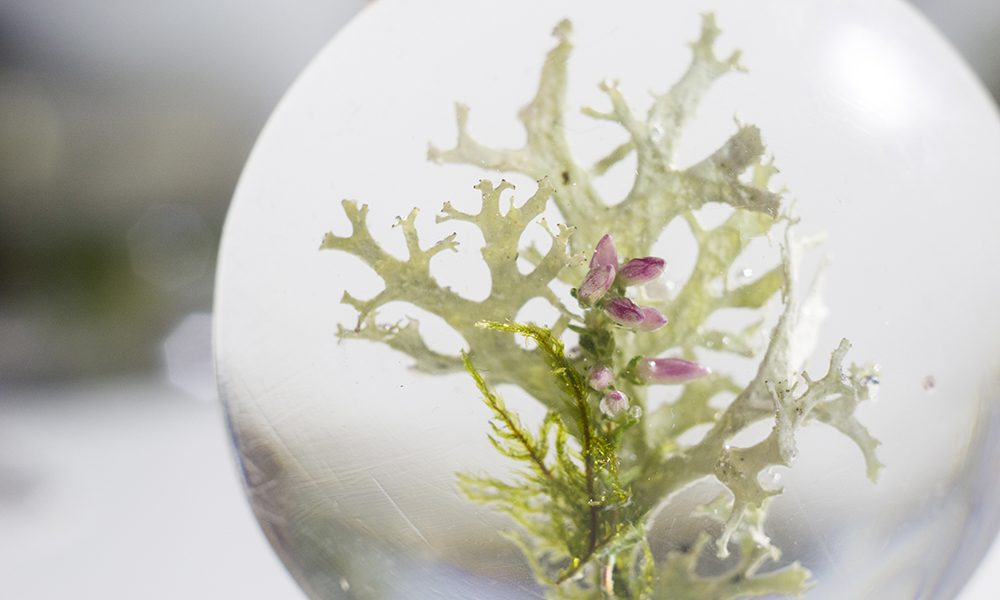
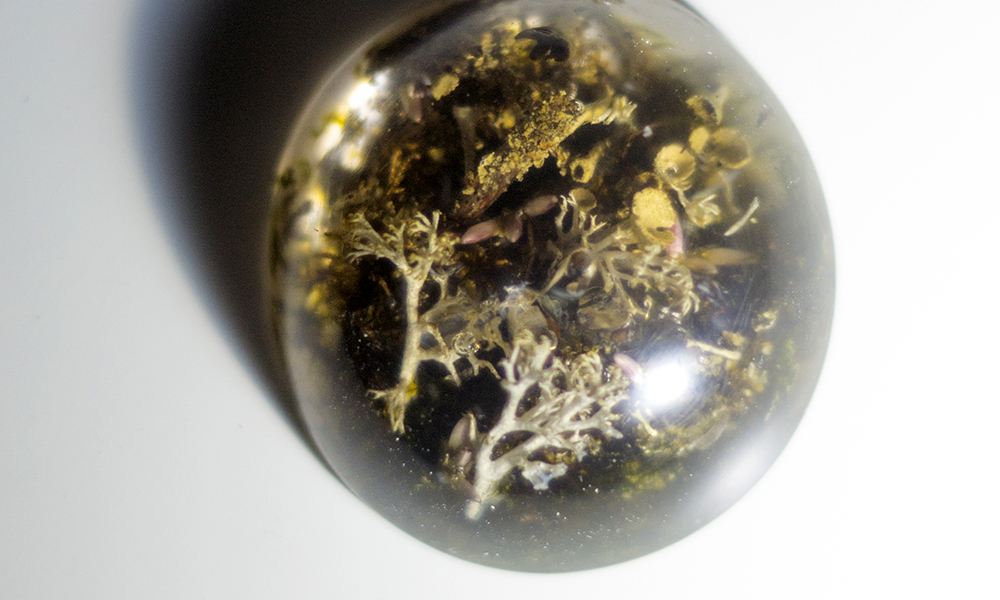
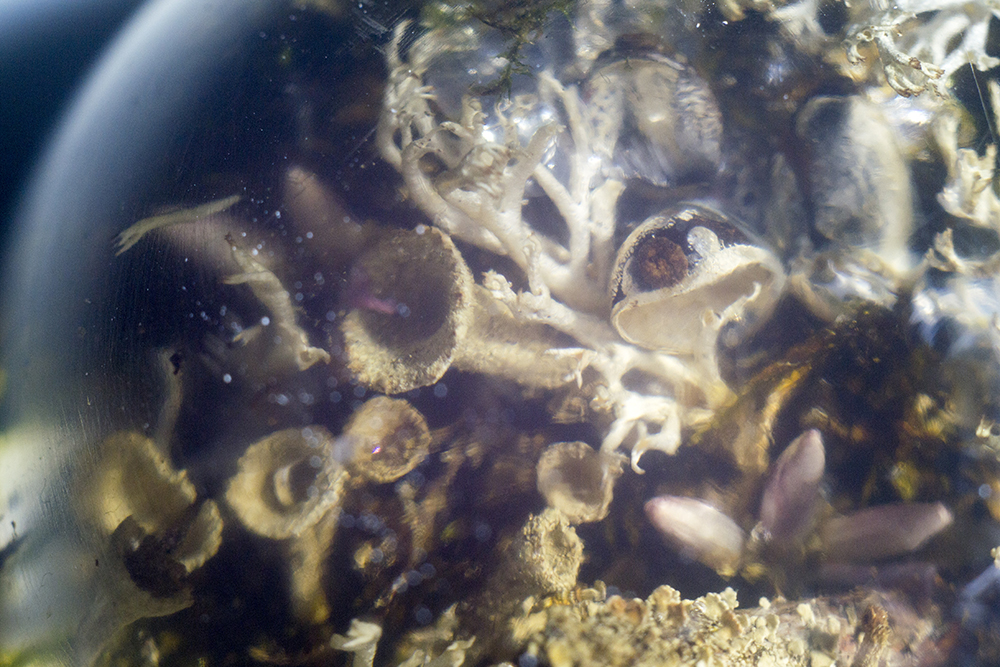
In Reverie, Wawrzyniuk transforms fragments of mosses, lichens, and small plants into sculptural objects encased in transparent resin. Suspended within cubes and spheres, these delicate organic forms appear simultaneously preserved and isolated — held in a state between life and stillness.
The project emerges from a desire to protect what is fragile and easily overlooked. By enclosing modest forest specimens within clear geometric volumes, Wawrzyniuk elevates them to the status of precious artifacts. The resin functions both as a shield and as a barrier: it safeguards the material from decay and human interference, yet it also separates it from its original ecosystem.
Each specimen is carefully collected in the artist’s homeland, documented with attention to species and precise location. This act of recording becomes part of the work itself — a gesture of care, responsibility, and witnessing. The geometric forms emphasize the singularity of each organic detail, inviting viewers to reconsider scale, value, and proximity.
Reverie reflects on preservation not as possession, but as contemplation. It asks whether protection can coexist with intervention, and what it truly means to safeguard nature in a world that constantly alters it.
In Reverie, Wawrzyniuk transforms fragments of mosses, lichens, and small plants into sculptural objects encased in transparent resin. Suspended within cubes and spheres, these delicate organic forms appear simultaneously preserved and isolated — held in a state between life and stillness.
The project emerges from a desire to protect what is fragile and easily overlooked. By enclosing modest forest specimens within clear geometric volumes, Wawrzyniuk elevates them to the status of precious artifacts. The resin functions both as a shield and as a barrier: it safeguards the material from decay and human interference, yet it also separates it from its original ecosystem.
Each specimen is carefully collected in the artist’s homeland, documented with attention to species and precise location. This act of recording becomes part of the work itself — a gesture of care, responsibility, and witnessing. The geometric forms emphasize the singularity of each organic detail, inviting viewers to reconsider scale, value, and proximity.
Reverie reflects on preservation not as possession, but as contemplation. It asks whether protection can coexist with intervention, and what it truly means to safeguard nature in a world that constantly alters it.
Quisque iaculis facilisis lacinia. Mauris euismod pellentesque tellus sit amet mollis.